How Long Does Nanoplasty Last? A Complete Guide
You’ve probably spent a good chunk of time researching hair treatments, and nanoplasty keeps coming up. One of the first questions people ask is simple but important: how long does nanoplasty actually last? The honest answer is, most people enjoy smooth, frizz-free results for anywhere between 3 to 6 months.
Some people with coarser or thicker hair types report results lasting up to 8 months, while those with finer hair or who wash frequently may see results fade closer to the 3-month mark. How long it lasts depends on several factors, your hair type, the products you use afterward, how often you wash your hair, and the skill of the professional who applied it.
In this guide, we’ll break all of that down so you know exactly what to expect.
Understanding Nanoplasty
Before we get into how long results last, it helps to understand what nanoplasty actually does to your hair.
Nanoplasty is a hair smoothing and repair treatment that works at a molecular level. The term “nano” refers to the tiny size of the active particles in the formula. they are small enough to slip inside the hair shaft and work from within. Most nanoplasty formulas contain amino acids, hydrolyzed proteins, and collagen, which fill in gaps and damage in the hair fiber. The result is hair that feels stronger, looks shinier, and is far easier to manage.
Unlike older straightening treatments that chemically alter the hair’s bonds, nanoplasty restores what’s already there. It’s a repair-first approach, which is a big part of why it has grown so popular as a gentler alternative to Brazilian blowouts and traditional relaxers.
There are different types of nanoplasty treatments available. Some are formulated for light smoothing and frizz control, while others deliver more intense straightening. Your stylist should match the formula to your hair goals, a consultation before the appointment is always worth the time.
Who Is a Good Candidate for Nanoplasty?
Nanoplasty works well for a wide range of people, but it’s not the right fit for everyone.
You’re likely a great candidate if you have frizzy, wavy, or curly hair that you’d like to manage more easily. People with chemically treated or heat-damaged hair often see excellent results because the treatment helps rebuild and restore weakened strands. Those dealing with dry, rough texture can also benefit significantly.
On the other hand, nanoplasty may not be ideal if your hair is extremely over-processed — for example, if it has been heavily bleached and is already at a fragile point. In those cases, a period of restorative conditioning is usually recommended before doing any smoothing treatment. Pregnant women are generally advised to avoid chemical hair treatments as a precaution, though nanoplasty is among the milder options.
The Benefits of Nanoplasty
The appeal of nanoplasty goes beyond just straight, smooth hair. Many people choose it because it genuinely improves hair health over time.
The amino acids and proteins deposited during treatment strengthen the hair structure. Users often notice less breakage, improved elasticity, and softer texture even after the smoothing effect starts to fade. Hair that was once dull and brittle can look noticeably healthier after a session.
From a practical standpoint, the treatment dramatically cuts down daily styling time. Hair that used to take 45 minutes to blow-dry and straighten can air-dry smooth and manageable in a fraction of the time. For many people, that alone justifies the cost.
Shine is another consistent benefit. The proteins seal the hair cuticle, which reflects light more evenly — giving hair a polished, healthy appearance.
What Affects How Long Nanoplasty Lasts?
This is the core question, and the answer has several layers.
Hair type plays the biggest role. Thick, coarse, or very curly hair tends to hold the treatment longer, sometimes up to 6 to 8 months, because the formula has more surface area to bond with. Fine or thin hair, while still benefiting from the treatment, often sees results fade faster, typically around 3 to 4 months.
Washing frequency is the next biggest factor. Every wash gradually strips away the treatment. People who wash their hair daily will see results fade within 2 to 3 months. Washing 2 to 3 times per week can extend results considerably. This doesn’t mean you need to stop washing your hair, it just means spacing out washes where possible will help.
Shampoo and conditioner choice matters more than most people realize. Sulfate-based shampoos are particularly harsh on nanoplasty. They break down the protein bonds faster than sulfate-free alternatives. Switching to a sulfate-free, sodium chloride-free shampoo after your treatment is one of the simplest ways to preserve your results for longer.
Heat styling can also shorten the lifespan of the treatment if used excessively. Ironically, one of the benefits of nanoplasty is that you need less heat styling, so leaning into that and letting hair air-dry naturally will help the treatment last.
The quality of application is something people often overlook. A properly applied treatment, where the product is evenly distributed and sealed in with the correct flat iron temperature and technique, will last significantly longer than a rushed or uneven application.
Nanoplasty for Specific Hair Concerns: Does It Last Differently
Many people come to nanoplasty with a specific concern in mind, and it’s worth knowing how well the treatment addresses each one over time.
For frizz and flyaways, nanoplasty delivers some of its longest-lasting results. Even as the straightening effect softens over time, frizz control tends to remain noticeable for several months after.
For improving texture and tone, the nourishing ingredients in nanoplasty particularly hydrolyzed proteins, continue to benefit hair health even as the cosmetic smoothing effect fades. Many clients report that their hair feels better overall for months after treatment.
For fine lines in the hair structure (split ends, rough cuticles, surface damage), nanoplasty provides temporary improvement. It fills and seals these issues, but it doesn’t permanently fix them. Continued care with conditioning treatments is still necessary.
Comparing Nanoplasty to Other Treatments, Which Lasts Longer?
It’s natural to wonder how nanoplasty stacks up against other options in terms of longevity.
Keratin treatments typically last a similar amount of time, 3 to 5 months for most people. However, keratin treatments work primarily by coating the outside of the hair, while nanoplasty works from within. The repair benefits of nanoplasty tend to persist longer even after the smoothing effect fades.
Brazilian blowouts can last up to 3 to 4 months, and some formulas may stretch slightly longer. However, they often contain higher levels of formaldehyde or similar compounds, which raises safety concerns for many people.
Traditional chemical straightening (relaxers) is permanent, it alters the hair’s bonds irreversibly. While this means you don’t need to repeat the treatment as often, it comes with significantly higher damage risk and no going back.
Hair spa treatments are conditioning-based and typically last only until the next wash or two. They are excellent for regular maintenance but are not comparable to nanoplasty in terms of lasting smoothing effects.
In terms of cost, nanoplasty generally falls in a mid-range price point. At $150 to $400 per session (varying by location and salon in melbourne), it’s more affordable than surgical options and less damaging than permanent chemical treatments.
How to Make Nanoplasty Last as Long as Possible
Getting the treatment is only the first step. What you do afterward has a significant impact on how long you enjoy the results.
For the first 48 to 72 hours after your session, avoid washing your hair, tying it up, or using any clips or headbands. This window is when the treatment is still bonding with the hair structure, and any pressure or moisture can interfere with that process.
After that initial period, shift to a sulfate-free shampoo and conditioner. This single change can extend your results by several weeks. Look for products labeled “safe for keratin or treated hair” — these are usually formulated to be gentle on chemical treatments.
Reduce washing to 2 to 3 times per week. On off days, dry shampoo can be your best friend. When you do wash, use lukewarm water rather than hot, heat accelerates the fading of the treatment.
Apply a light hair oil or serum between washes to maintain moisture and shine. Argan oil and marula oil are popular choices that won’t weigh hair down but help preserve the treatment’s effects.
Avoid swimming in chlorinated pools or saltwater without protecting your hair first. Both chlorine and salt are particularly effective at stripping treatments quickly. If you do swim, rinse your hair with clean water immediately after and apply a leave-in conditioner.
How Often Should You Get Nanoplasty Done?
Most hair professionals recommend scheduling nanoplasty every 3 to 5 months, aligning roughly with when the results start to visibly fade. Getting it done more frequently than every 3 months is generally not advised, as repeated protein treatments without adequate rest can lead to protein overload — a condition that makes hair stiff, dry, and prone to breakage.
If your hair is in excellent condition and you follow a solid aftercare routine, you may comfortably go 5 to 6 months between sessions. Let your hair’s condition guide the timing rather than sticking rigidly to a calendar.
Nanoplasty and Mental Health: The Bigger Picture
It’s worth pausing to acknowledge that the decision to pursue any cosmetic treatment, even one as accessible as nanoplasty, often carries emotional weight.
For many people, hair is deeply connected to self-image. Managing unruly or damaged hair daily can be frustrating and, for some, genuinely affects confidence. Nanoplasty can provide a meaningful boost in self-esteem by giving people more control over how they look and feel on a day-to-day basis.
At the same time, it’s important to approach the treatment with realistic expectations. Nanoplasty will smooth and improve your hair, but it’s not a permanent fix, and it works best as part of a broader hair care routine rather than a standalone solution. Being clear on what you want from the treatment before you book helps ensure you walk away satisfied rather than disappointed.
If you find yourself feeling anxious, fixated, or distressed about your hair or appearance in ways that go beyond normal concerns, it may be worth speaking with a professional. Body dysmorphic disorder, while not common, can sometimes be triggered or amplified by cosmetic procedures. Setting realistic goals and talking openly with your stylist about expectations is always a healthy starting point.
Cultural Perspectives on Hair Treatments
Hair treatments like nanoplasty are sought after across the world, but attitudes toward them vary widely by culture.
In many Latin American and South Asian communities, smooth, manageable hair has long been associated with professionalism and beauty. Treatments that help achieve that look are embraced enthusiastically and have been mainstream in salons across Brazil, India, and the Middle East for years.
In other cultural contexts, there’s a growing movement toward embracing natural hair textures — particularly among Black women who have historically faced social pressure to chemically alter their hair. For those communities, the choice to use or avoid a smoothing treatment is often a deeply personal one, tied to identity, history, and self-expression.
Media and popular culture continue to shape beauty standards globally. Social media in particular has made certain aesthetics more aspirational, which in turn drives demand for treatments like nanoplasty. Being aware of these influences, and making choices based on what genuinely suits your hair and lifestyle rather than a trend, leads to better outcomes and more satisfaction with any treatment.
Final Thoughts
So, how long does nanoplasty last? For most people, 3 to 6 months, with the potential to stretch further depending on hair type and care. It’s one of the more durable, health-forward smoothing treatments available, and when maintained properly, it delivers real value.
The key is treating it as an investment. Choose a skilled professional, use the right aftercare products, and give your hair what it needs between sessions. Do that, and you’ll get every week of results that the treatment promises.

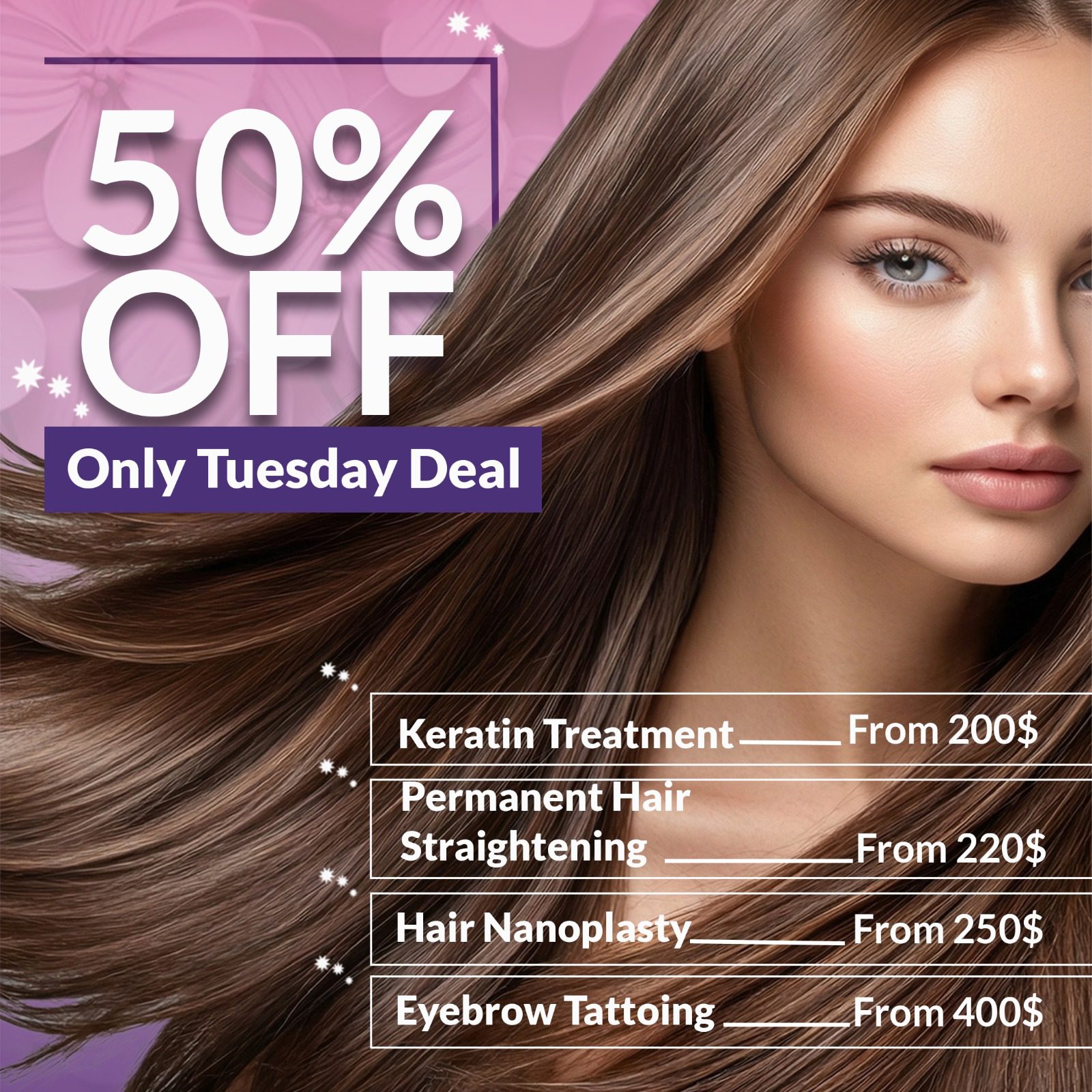
SALE 50% Off
Only On Tuesdays
Recent Posts